Every year, the federal government distributes billions of dollars to programs that support public safety at the state, local and tribal level. These funds support training and supplies for local police and firefighters, substance abuse treatment centers, public communications, mental health programs, climate resilience and so much more.
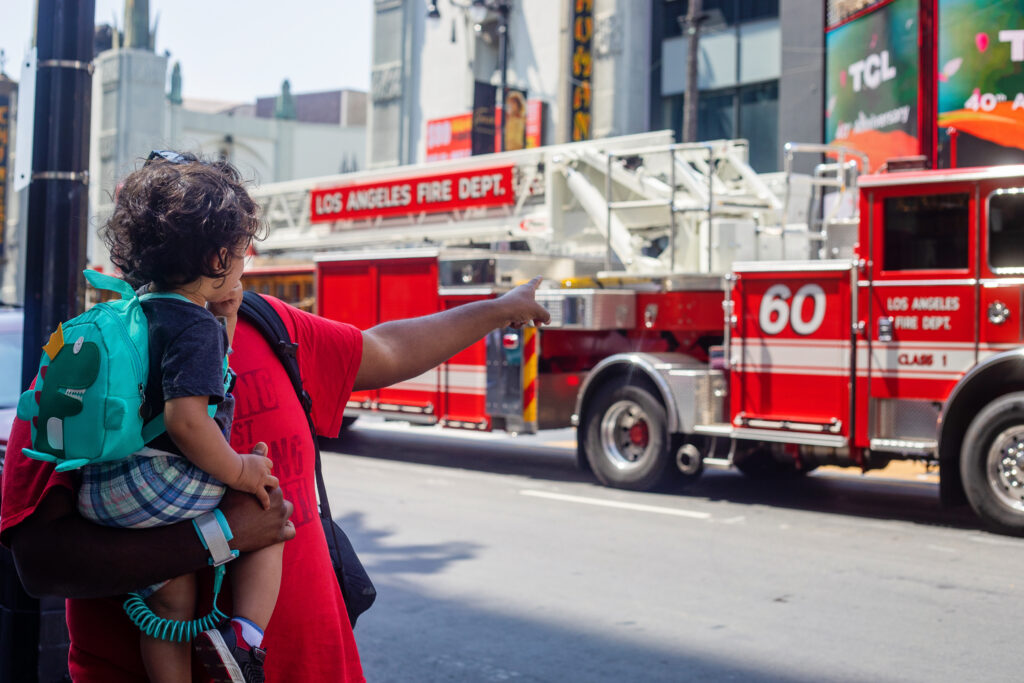
Your Security: Safe and Sound (or Not?)
You may be worried about…
What if you weren’t sure help would be there? Where does all of this public safety money go? I thought my town was responsible for our police and fire departments? What if the whole town is blocked in after a storm, how will anyone get to us? What if a child is taken across state lines? What if a lot of people in town have become addicted to a new drug? Who runs the domestic abuse hotline? Does it matter if there’s less money this year if we already have a police force? What happens if the prison system in our state loses federal support? Someone is still tracking terror threats against our public infrastructure, right? Why is it that every time a storm hits, more and more of our infrastructure gets destroyed? What if our whole state is hit? How will state workers, trucks, and equipment get to us? This has happened before, why weren’t we ready before the storm? What if we don’t get a reliable warning that the disaster iscoming? What if there’s no one to answer the phone when we call for help? What if some of the damage could have been avoided? What if fire season comes, and we aren’t ready? How many people are really needed in firefighting? I thought most fire departments were staffed with volunteers? What do firefighters do when there’s no fire? What if the nonprofits holding communities together collapse? What if community safety programs disappear? Why do we spend money on programs that deal with things that haven’t happened yet – How does that make us safer?
Who are the first people to arrive in your community after a natural disaster?
More than half of the 450,000 members of the National Guard participate in disaster response each year. National Guardsmen can be called up by their State Governors and work in conjunction with FEMA during natural disasters. But now, FEMA is being cut and the domestic duties of the National Guard are being redefined.
State National Guard Units are critical to disaster response. They perform search and rescue missions, reopen roads, distribute food and water & provide critical support in fighting wildfires.
Who is tracking potential terrorists or terror threats?
In late March of 2025, the Department of Homeland Security (DHS) announced that it is withholding and potentially cancelling counterterrorism training grants from several major cities in retaliation for Governors’ failure to comply with policies of the Administration. The Administration has also withheld hundreds of millions of dollars in public safety grants, including those to organizations that research and track domestic extremist groups.
11 States and the District of Columbia have sued DHS over deep cuts to counterterrorism grants.
The DOJ has brought fraud charges against the Southern Poverty Law Center, a nonprofit that tracks domestic extremist groups.
What about your local non-profits that run addiction treatment programs?
Many public safety services are delivered by nonprofits: shelters, hotlines, addiction treatment centers, youth programs, and violence-prevention groups. And most of them rely on federal grants to fund at least part of their difficult and unglamorous but very important work. In fact, federal grants make up about one-third of nonprofit revenue nationwide. And tens of thousands of organizations rely on them for more than half their funding.
More than 35,000 non-profits rely on federal grant money for more than half of their revenue.
Without these organizations, many communities would lose access to many public safety and prevention services.
Will there be enough firefighters to save your town in the event of a wildfire?
More than 3,500 jobs have been cut from the National Forest Service, which stands at the frontline of wildfire prevention. Training at the National Firefighters Academy – which trains up to 100,000 firefighters a year – was paused without explanation from March to June 2025. Meanwhile, a massive reorganization of the National Forest service will shutter most of the agencies research stations across the country.
Almost 1/3 of us live in areas at risk of wildfire.
More than 18,000 structures – including many homes – were destroyed by fire in 2025.
77,750 wildfires were reported in 2025.
Your Meals
Your Work